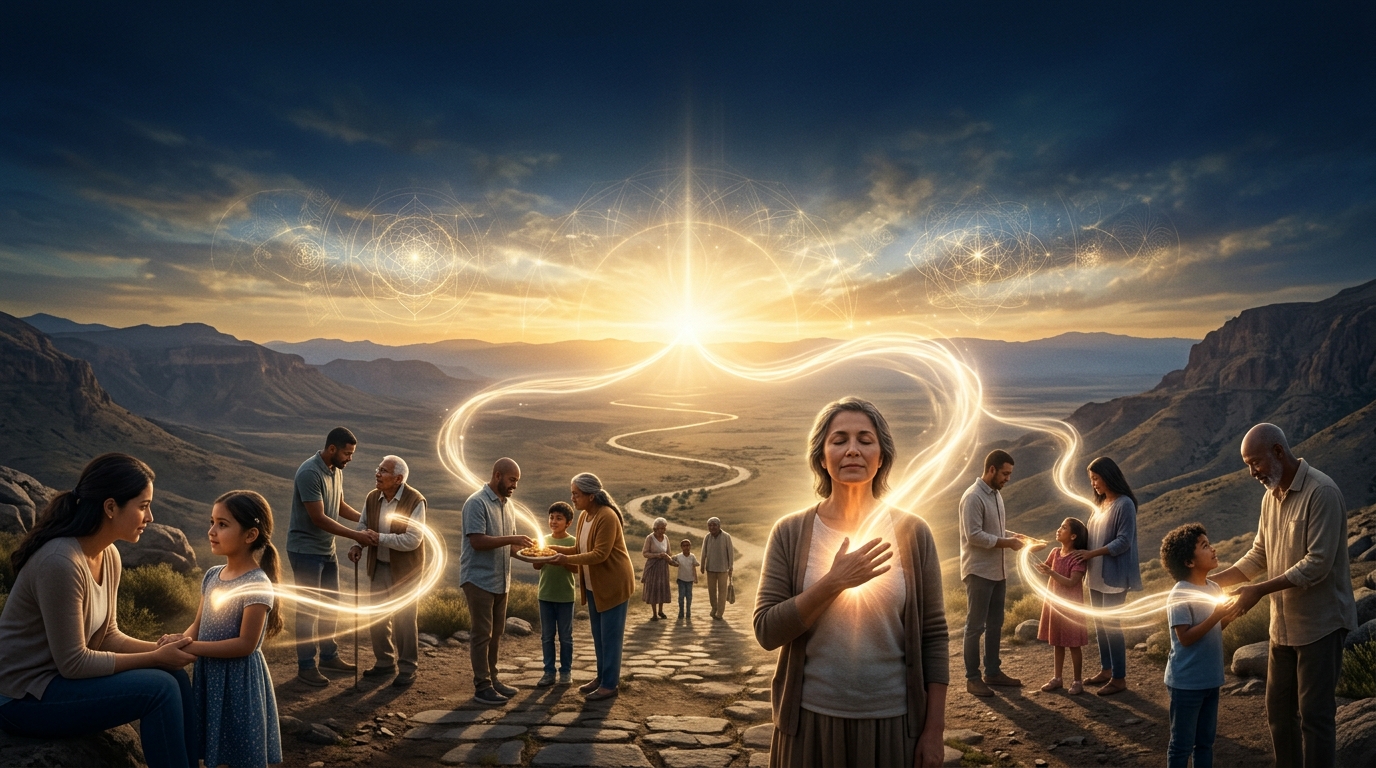
“Human morality may recognize values, but only religion can conserve, exalt, and spiritualize such values.” 102:5.3 (1124.2)
Human beings have an extraordinary capacity to recognize goodness. Across cultures and generations, we have developed ideas about honesty, justice, compassion, courage, loyalty, and service. Even without sharing the same religion, people can recognize that certain ways of treating one another are better than others. Morality gives us a framework for distinguishing right from wrong and helps societies establish standards for human behavior. But this teaching suggests that recognizing a value is only the beginning. Something deeper is required if those values are to remain alive, rise above changing circumstances, and become truly transformative.
Because human values can be vulnerable to circumstance. What one generation considers honorable, another may question. What a society praises today may be rejected tomorrow. Personal convenience can slowly replace principle, and collective interests can redefine what is considered acceptable. Religion, at its highest spiritual expression, gives values a transcendent foundation. Truth is not merely useful. Love is not merely socially beneficial. Mercy is not merely admirable. They become reflections of a higher reality. When we connect our values with the Father, they cease to be preferences we happen to hold and become ideals worthy of our deepest loyalty.
But to spiritualize a value means more than attaching religious language to it. It means allowing that value to become part of our relationship with God and therefore part of who we are. Compassion becomes an expression of divine love. Service becomes participation in a larger purpose. Forgiveness becomes an imitation of the Father's mercy. Truth becomes something we seek not merely because it is intellectually satisfying, but because it draws us closer to the source of all truth. The value moves from the moral code into the soul. It becomes lived experience.
This is why spiritual religion, at its best, does not make morality unnecessary. It makes morality deeper. A person may choose honesty because dishonesty has consequences, but a spiritually minded person can eventually choose truth because truth itself has become sacred. We can serve because society rewards service, because our conscience demands it, or because we have discovered the joy of participating in God's work. The action may look similar from the outside, but its spiritual meaning is profoundly different.
Perhaps this is what gives civilization its enduring foundation. Laws can regulate behavior, but only deeply held values can inspire people to do what is right when nobody is watching. Institutions can preserve principles for a time, but spiritual conviction can carry them across generations. Morality recognizes the good; religion can transform the good into a way of life.
And when our highest values become spiritual realities within us, we no longer simply ask, “What is the right thing to do?” We begin asking a deeper question: “What kind of person is God inviting me to become?”
Which value—truth, love, justice, mercy, courage, or service—has become more meaningful to you as your spiritual life has deepened?