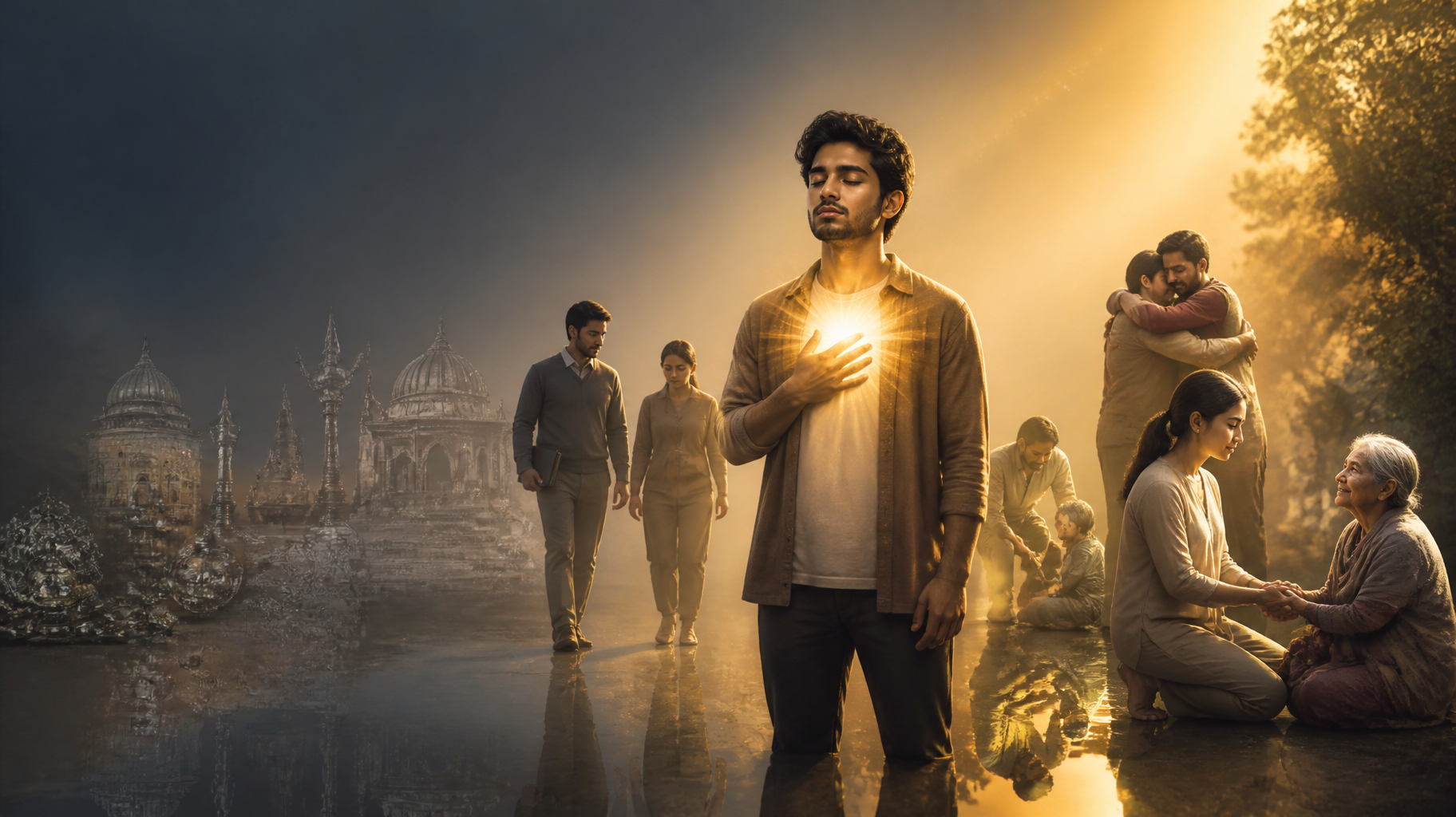
“Jesus transcended all the teachings of his forebears when he boldly substituted clean hearts for clean hands as the mark of true religion. He put reality in the place of tradition and swept aside all pretensions of vanity and hypocrisy.” 149:2.11 (1671.6)
It is possible to look spiritual without becoming more spiritual. We can know the right words, follow familiar traditions, participate in religious practices, and even appear deeply devoted while something very different is happening inside us. Jesus challenged that kind of religion by shifting attention from external appearances to the condition of the heart. The deeper question was no longer simply, “Am I doing the right things?” but “What kind of person am I becoming?”
That question is surprisingly practical. We can be polite while secretly holding resentment. We can talk about forgiveness while keeping a mental record of someone's mistakes. We can speak about love while being impatient with the people closest to us. We can defend our beliefs while treating someone who disagrees with us as though they have less value. None of this means that religious practices or traditions are meaningless. It means they should lead somewhere. The outer practice should become an expression of an inner reality.
This gives us a powerful test for everyday spirituality: Does what I believe make me better at loving people? Does it make me more honest when telling the truth costs me something? More patient when someone frustrates me? More humble when I am wrong? More generous when nobody is watching? More willing to serve without receiving recognition? These are not spectacular spiritual achievements. They are ordinary moments in which the condition of the heart becomes visible.
And perhaps this is why Jesus' approach remains so challenging. Tradition can tell us what people before us practiced. Rules can tell us what is expected. But reality asks us to live the truth for ourselves. It asks us to examine our motives, confront our inconsistencies, and allow our relationship with the Father to transform the person behind the public image. Spiritual maturity isn't about becoming better at appearing righteous. It is about becoming more genuine.
The world doesn't need more people who merely look spiritual. It needs people whose spirituality can be recognized by the way they treat others, especially when nobody is applauding.
If the people closest to you could measure your spirituality only by your everyday behavior, what would your life reveal?