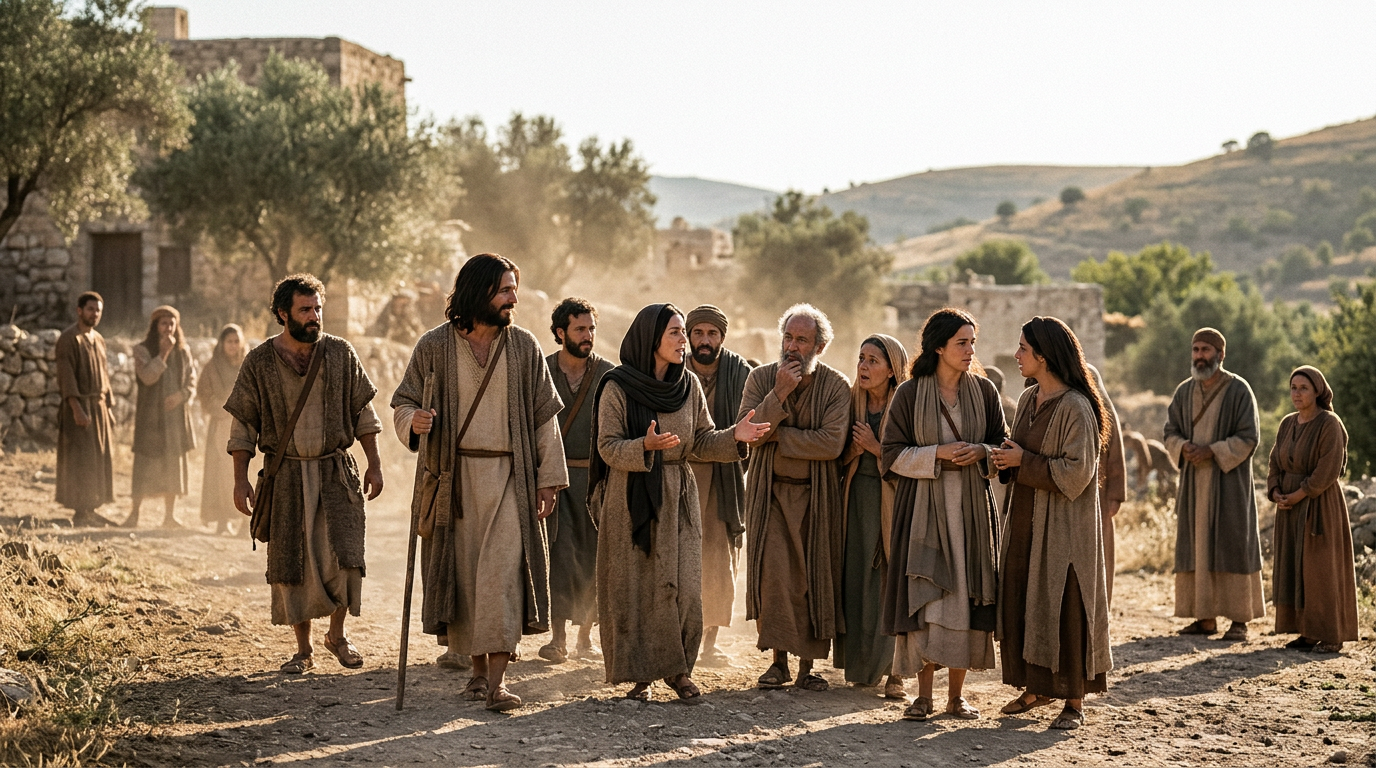
“In a day and generation when a man was not supposed to salute even his own wife in a public place, Jesus dared to take women along as teachers of the gospel in connection with his third tour of Galilee.” 149:2.8 (1671.3)
Leadership is often celebrated when it produces results, but some of the most consequential leadership begins by challenging assumptions that everyone else has accepted as normal. In Jesus' time, the social boundaries surrounding women were deeply restrictive. Yet rather than simply criticizing those boundaries, Jesus demonstrated another way. He welcomed women into the work of teaching the gospel and gave them a place in his public ministry. His actions communicated something more powerful than a declaration: spiritual capacity is not determined by social convention.
There is an important leadership lesson here. Every organization, community, and culture develops assumptions about who is qualified to lead, who should be heard, and whose contribution matters. Sometimes those assumptions are based on genuine ability; sometimes they are inherited without examination. The courageous leader learns to distinguish between the two. They look beyond titles, traditions, demographics, and expectations to recognize potential. They create opportunities for people who have been overlooked, not because inclusion is fashionable, but because valuable contributions are lost whenever human potential is unnecessarily restricted.
Jesus' example also reminds us that meaningful change often begins with behavior rather than rhetoric. It is easy to announce that everyone matters. It is much harder to actually give people responsibility, trust their abilities, listen to their voices, and allow them to influence others. Jesus did not merely tell his followers that women possessed spiritual value; he entrusted them with meaningful participation in the mission. That kind of leadership creates change that lasts because it gives people the opportunity to demonstrate what they are capable of becoming.
Perhaps this is one reason genuine spiritual leadership can be disruptive. It does not simply preserve what has always been done. It asks whether our traditions are helping human beings fulfill their potential—or preventing them from doing so. The challenge is not to reject tradition simply because it is old, but to have enough wisdom and courage to recognize when a tradition has become an obstacle to truth. Progress begins when we become willing to see people for what they can contribute rather than for the limitations society has placed around them.
Where do you see overlooked potential today: in the workplace, in community leadership, or in the next generation?