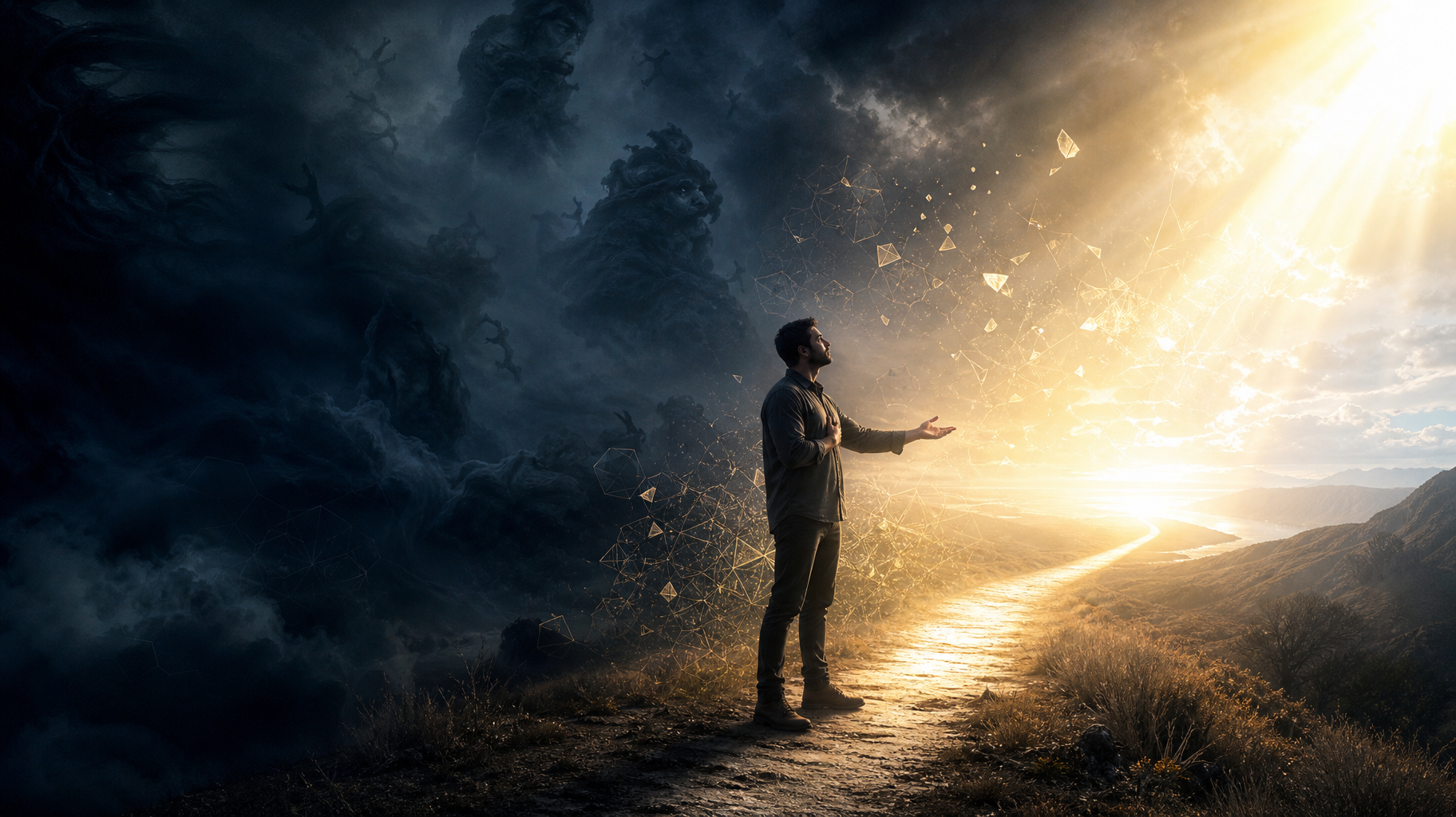
“Few persons live up to the faith which they really have. Unreasoned fear is a master intellectual fraud practiced upon the evolving mortal soul.” 48:7.4 (556.4)
Most of us probably have more faith than we realize. We believe in love, in goodness, in the possibility of growth, in the presence of God, and in the idea that life has meaning. But then something happens. A difficult conversation. A financial setback. An uncertain future. A health scare. A relationship changes. Suddenly, the beliefs that seemed so solid become difficult to live by. Fear doesn't necessarily destroy our faith; sometimes it simply convinces us to stop acting as though we have it.
That is what makes unreasoned fear so powerful. Fear can create an entire story before reality has even had a chance to unfold. What if everything goes wrong? What if I fail? What if they leave? What if I can't handle it? The mind begins responding to imagined futures as though they were present realities. And when fear takes control, we often make decisions designed to protect ourselves rather than decisions aligned with our deepest values. We withdraw instead of connecting. We control instead of trusting. We react instead of understanding.
The spiritual challenge is not to pretend that fear doesn't exist. Fear is part of being human. The challenge is to refuse to give fear more authority than truth deserves. When anxiety appears, we can pause before accepting its story. We can separate what we actually know from what we merely imagine. We can ask: What is true right now? What is within my control? What does faith invite me to do? Sometimes the most spiritual thing we can do is simply take the next right step without demanding certainty about everything that comes afterward.
And this is where faith becomes practical. Faith isn't only something we profess in peaceful moments. It becomes a way of living. We answer the difficult email instead of avoiding it. We have the honest conversation instead of rehearsing imaginary disasters. We keep serving when recognition doesn't come. We forgive even when resentment feels safer. We move forward even when we cannot see the entire path. Faith becomes real when it influences our choices more strongly than fear does.
Perhaps the goal isn't to become someone who never feels afraid. Perhaps it is to become someone who can feel fear without allowing it to determine the direction of their life.
Where might fear currently be asking you to live smaller than your faith would allow?