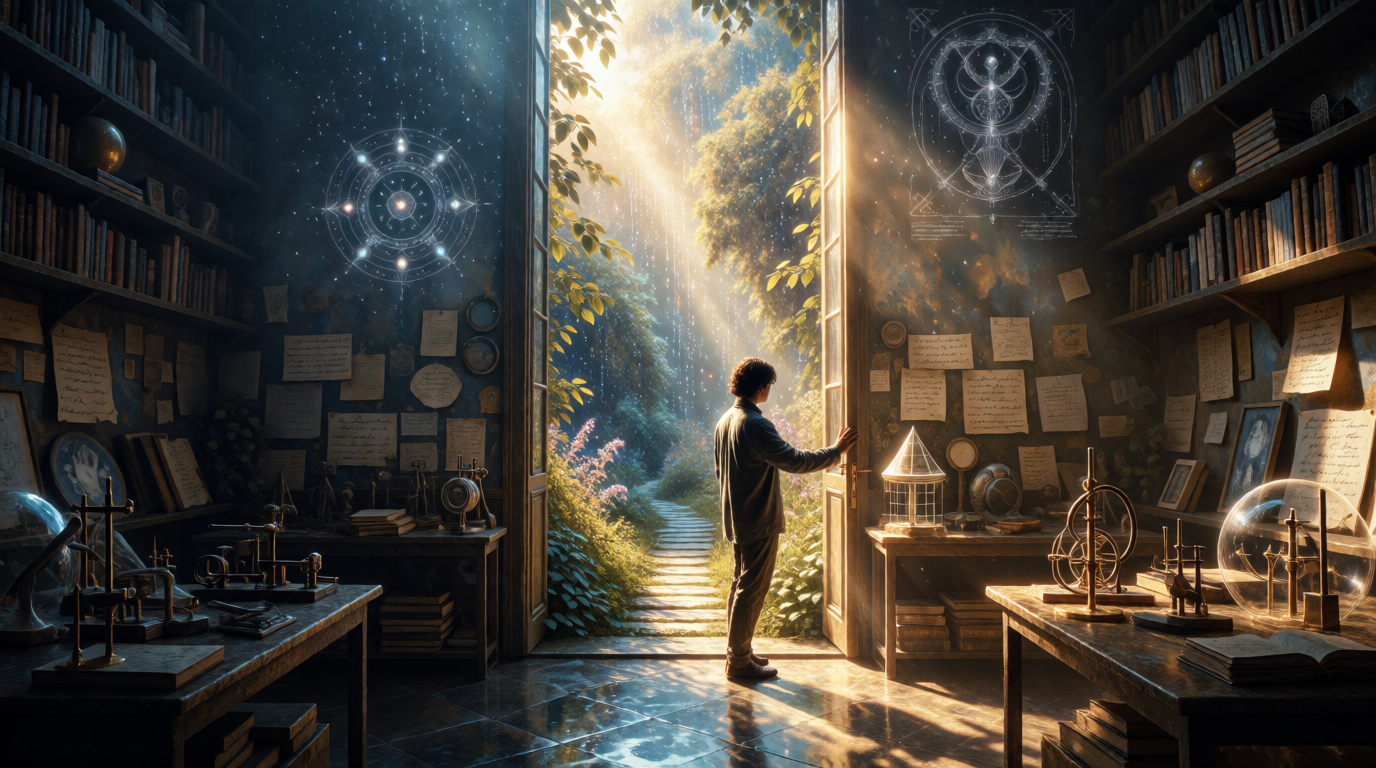
“There is a reality in religious experience that is proportional to the spiritual content, and such a reality is transcendent to reason, science, philosophy, wisdom, and all other human achievements.” 103:9.12 (1142.3)
Human achievement has given us extraordinary ways to understand the world. Science investigates how things work, philosophy examines what they mean, and wisdom helps us apply what we have learned. Yet there are dimensions of life that become difficult to communicate through explanations alone. Love, for example, can be studied and described, but no definition fully conveys what it means to love someone. In a similar way, spiritual experience may offer a personal sense of meaning, connection, and inner direction that exceeds our ability to put it into words.
This does not mean that spirituality must reject reason or stand apart from thoughtful inquiry. Rather, it invites us to recognize that understanding has different dimensions. We can analyze compassion, but practicing compassion reveals something that analysis alone cannot provide. We can discuss forgiveness, but the experience of genuinely releasing resentment may change us in ways that an intellectual definition never could. Spiritual insight becomes real in our lives when it moves beyond an idea and begins to shape our character, priorities, and relationships.
The value of a spiritual experience, therefore, is not simply how extraordinary it feels or how confidently we describe it. Its deeper significance can be seen in what follows. Does it make us more patient, honest, courageous, or compassionate? Does it help us face uncertainty without losing hope? Does it deepen our concern for others rather than make us feel superior to them? An experience that inspires lasting growth becomes more than a private moment; it becomes a source of transformation that others can recognize through our actions.
We do not need to explain every mystery before allowing an experience to teach us something meaningful. We can remain curious, think critically, and acknowledge the limits of our understanding while staying open to insights that emerge through reflection and lived experience. Sometimes, the most important knowledge is not another fact to memorize, but a truth we gradually learn to embody. What we cannot fully explain may still invite us to live more wisely, love more deeply, and become more fully human.
Reflect
Think of an experience that changed how you see yourself, another person, or life itself. Instead of focusing only on what happened, ask: What did this experience awaken in me, and how can I express that insight through one concrete action today?