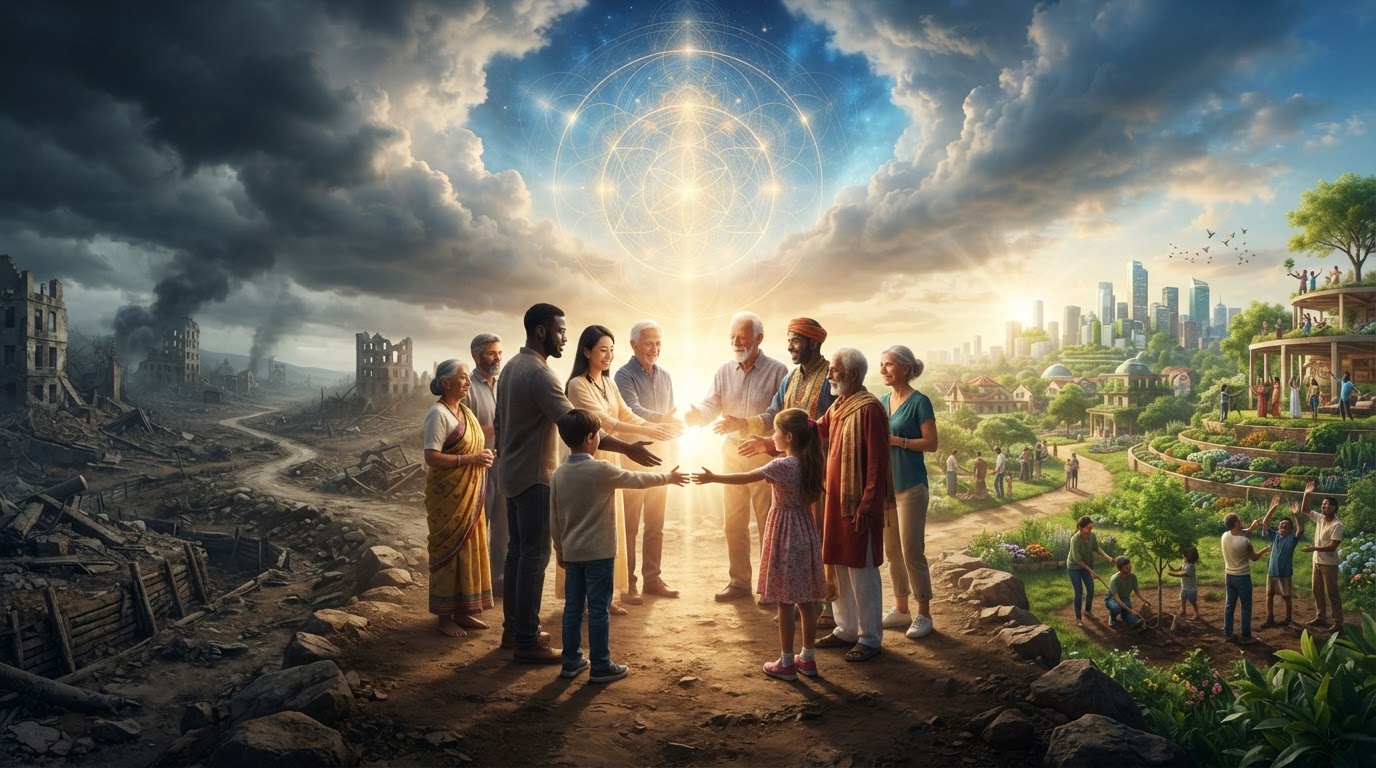
“How many world wars must be fought and how many leagues of nations must fail before men will be willing to establish the government of mankind and begin to enjoy the blessings of permanent peace and thrive on the tranquillity of good will—world-wide good will—among men?” 134:5.17 (1490.3)
History often reads like a record of lessons humanity has been reluctant to learn. Again and again, nations have turned to conflict believing that force could secure what wisdom, cooperation, and mutual understanding could not. Each generation promises that the latest war will be the last, that the latest tragedy will finally awaken humanity to a better way. Yet divisions persist because the roots of conflict are not merely political or economic. They lie deeper—in fear, mistrust, selfishness, prejudice, and the enduring belief that one group's success must come at another's expense. As long as these attitudes dominate human thinking, lasting peace will remain frustratingly elusive.
This teaching challenges us to think beyond temporary treaties and shifting alliances. Peace is not simply the absence of war. It is the presence of goodwill. A world free from open conflict but filled with suspicion, resentment, and hostility has only postponed the next crisis. Genuine peace emerges when people begin to recognize their common humanity and their shared destiny. The more interconnected our world becomes, the more apparent it is that no nation, culture, or people truly stands alone. Problems cross borders. Opportunities cross borders. Human suffering crosses borders. Increasingly, humanity is being invited to think and act as a single family living on a shared world.
Yet the path toward global goodwill begins in a surprisingly personal place. The same attitudes that create conflict between nations often appear in miniature within our own lives. We divide ourselves into competing groups, cling to grievances, and sometimes find it easier to judge than to understand. The spirit of peace must first be cultivated within individuals before it can flourish within societies. Every act of understanding weakens the foundations of conflict. Every act of forgiveness expands the possibilities of reconciliation. Every effort to see another person as a brother or sister contributes, however modestly, to the future of humanity.
The vision of world-wide goodwill may seem ambitious, even idealistic. But nearly every great advance in human civilization began as an ideal before it became a reality. The question is not whether humanity can afford to pursue greater unity. The question is whether humanity can afford not to. The future belongs not to those who perfect the art of conflict, but to those who learn the art of cooperation. Permanent peace will never be achieved by stronger weapons alone; it will be built by stronger goodwill among the people of the world.
What is one way you can practice world-wide goodwill in your daily life—especially toward someone whose background, beliefs, or experiences differ from your own?