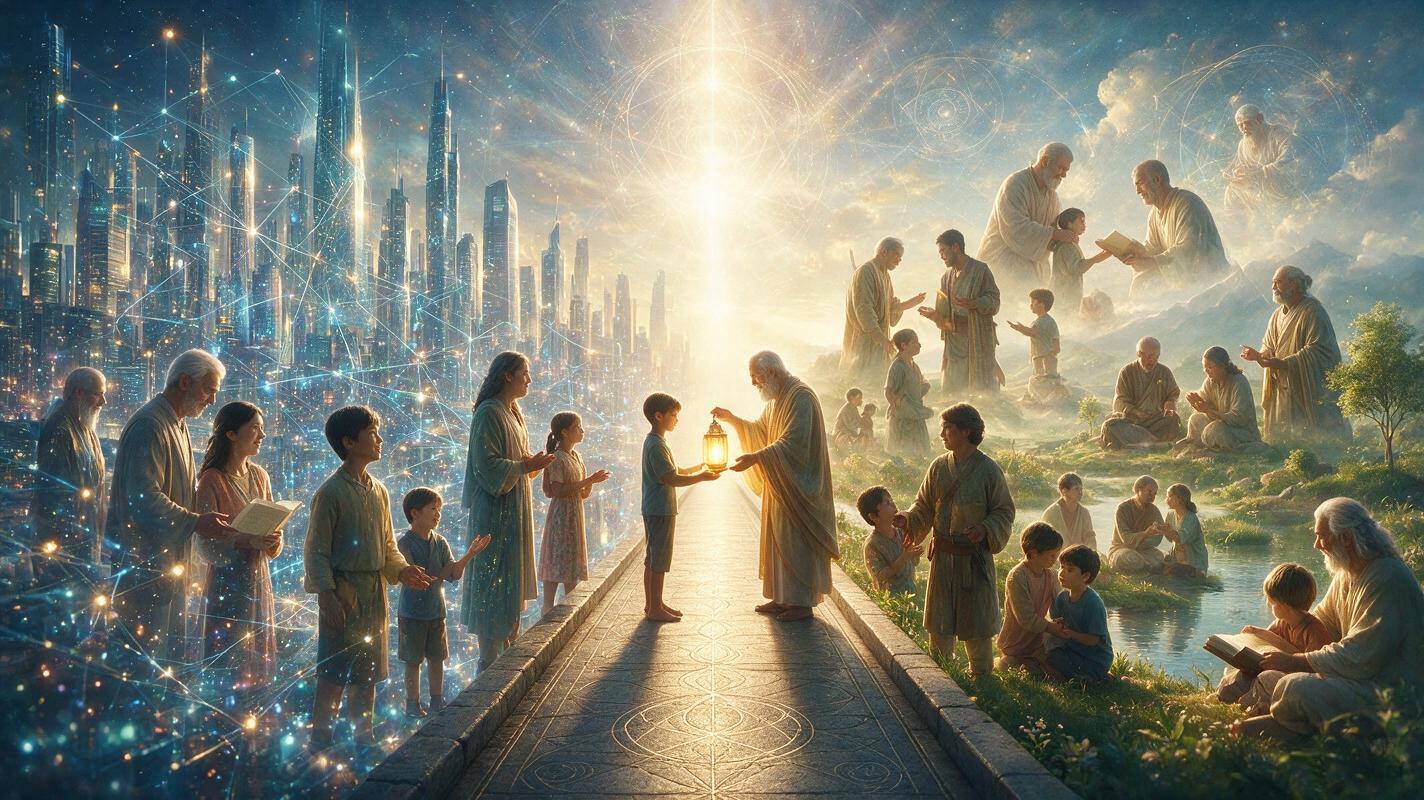
“Every ten generations mankind must learn anew the art of living if progress is to continue. And if man becomes so ingenious that he more rapidly adds to the complexities of society, the art of living will need to be remastered in less time, perhaps every single generation.” 160:1.3 (1772.4)
Humanity has become extraordinarily skilled at improving the tools of life. We build faster systems, create smarter technologies, expand scientific knowledge, and connect the world in ways previous generations could scarcely imagine. Yet amid all this progress, a timeless question remains: Are we becoming better at living? Knowledge can be inherited. Technology can be transferred. Information can be stored. But wisdom must be rediscovered by every generation. No matter how much society advances, each new generation must still learn how to love, how to work, how to serve, how to overcome fear, how to navigate disappointment, and how to find meaning in life.
This teaching feels especially relevant today. Never before has humanity had access to so much information, yet many people feel overwhelmed, distracted, and uncertain about purpose. We have mastered countless methods for improving our standard of living, but the art of living itself often remains elusive. The challenge is that every new advancement introduces new complexities. Technologies solve problems while creating new temptations. Greater convenience can sometimes diminish resilience. Increased connection can paradoxically lead to deeper loneliness. Progress is valuable, but it does not eliminate the need for character, wisdom, and spiritual insight. In fact, the more complex society becomes, the more urgently we must cultivate these enduring qualities.
The art of living cannot be downloaded, delegated, or automated. It is learned through experience, reflection, relationships, and spiritual growth. Every generation must discover for itself the importance of truth, beauty, goodness, service, and faith. Parents teach it to children. Mentors pass it to students. Leaders model it for communities. And each person must ultimately choose whether to embrace it. The future of civilization depends not only on what humanity invents, but on what humanity becomes. A society may advance technologically while declining spiritually, or it may achieve material success while losing sight of the values that make life meaningful.
Perhaps this is the great challenge of our age. The question is no longer whether we can create more powerful tools. The question is whether we can develop the wisdom to use them well. Progress without wisdom is dangerous. Progress guided by spiritual insight becomes a force for human flourishing. The art of living has always been humanity's greatest lesson—and it remains one that must be learned anew by every generation.
What essential life lesson do you believe your generation has forgotten—and what can we do to pass it on before it must be learned the hard way again?