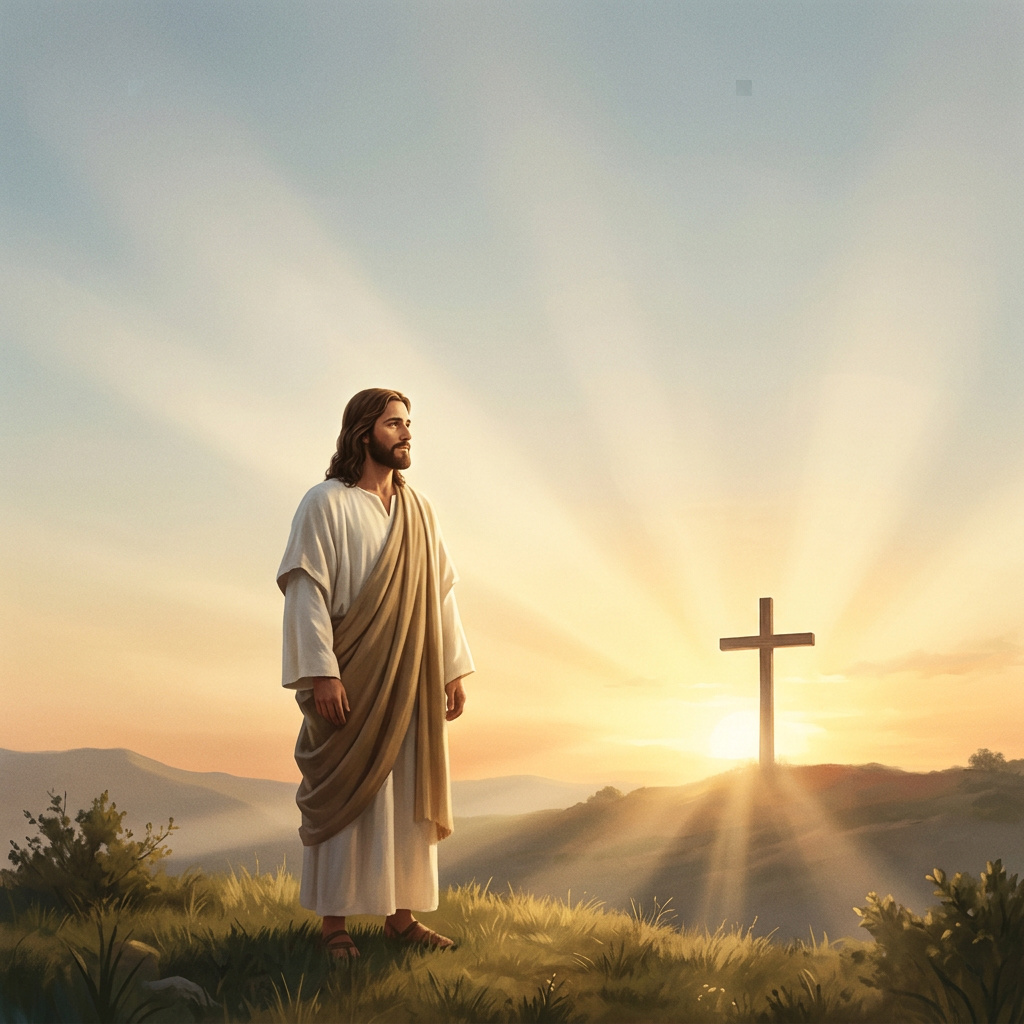
“What Jesus is now about to do, submit to death on the cross, he does of his own free will. In foretelling this experience, he said: “The Father loves and sustains me because I am willing to lay down my life. But I will take it up again. No one takes my life away from me—I lay it down of myself. I have authority to lay it down, and I have authority to take it up. I have received such a commandment from my Father.”” 187:0.3 (2004.3)
As the life of Jesus moved toward its final earthly moments, he faced the cross not as a helpless victim of circumstance but as a conscious participant in the unfolding of the Father’s will. The Urantia Book emphasizes that Jesus did not submit to death because he lacked the power to avoid it. Rather, he chose this path freely. His willingness to lay down his life was not an act of resignation, but an act of profound love and devotion.
In foretelling this moment, Jesus made clear that his life was not being taken from him by force. He declared that he laid it down of his own free will and that he possessed the authority to take it up again. This revelation transforms the meaning of the cross. It becomes not merely a tragedy of injustice but a demonstration of the highest form of spiritual sovereignty—the voluntary dedication of one’s life to the will of God and the good of others.
This choice reveals something essential about divine love. True love is never coerced, never compelled by fear or obligation. It is freely given. Jesus’ decision stands as an eternal example of a life so aligned with the Father’s will that even suffering and death could be embraced as part of a greater purpose.